

What Is a Membrane Filter and When Should It Be Replaced?
The membrane filter is the heart of a reverse osmosis water filter. It forces water under pressure through a very thin, semi-permeable film; most of the dissolved salts and limescale stay on the other side. In home systems, the membrane is usually replaced every 12–18 months.
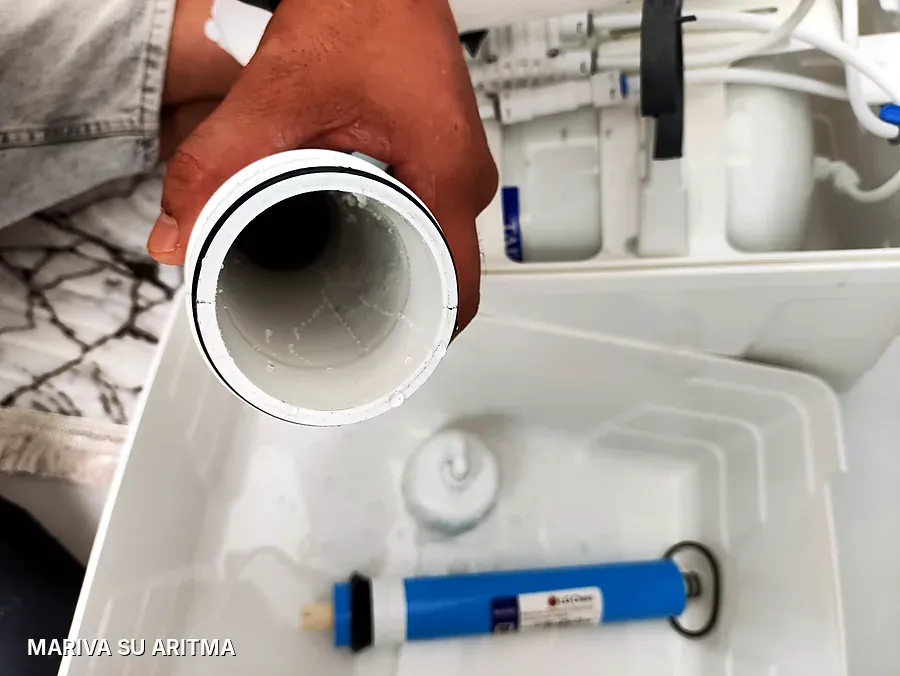
How does a reverse osmosis membrane work?
The membrane used in home systems is made of thin film layers wrapped around a tube. Water is pushed into these layers by mains water pressure or by pressure from a pump. Water molecules pass through the film and reach the filtered water tube; dissolved salts and minerals cannot. So that the membrane does not keep accumulating these salts, the concentrated water left behind is sent to the drain. This is why reverse osmosis systems produce waste water.
A membrane's capacity is given in GPD: the number of gallons it can filter in a day under ideal conditions. 75 GPD is about 284 litres. In practice, the amount filtered is lower than this, depending on water temperature and pressure. We explain how the whole system works, with a diagram, in our article What is water purification and how does it work?
What does a membrane remove, and what does it not?
A reverse osmosis membrane holds back most of the dissolved salts in water and most of the calcium and magnesium that form limescale. Nitrate and many heavy metals are also greatly reduced. That is why the TDS of the water drops sharply after filtration; with our home systems, the filtered water is usually in the 35–60 range.
The membrane does not solve everything on its own. The carbon filters remove the taste and smell of chlorine, and the post-carbon filter after the membrane improves the taste of the water coming from the tank. With water that carries a microbiological risk, such as well water, the membrane alone is not a safeguard; such water needs additional measures. More details in our article Well water treatment.
Why does a membrane wear out?
- Chlorine: The thin film layer of home membranes does not tolerate chlorine. If the carbon pre-filters are not replaced on time, chlorine reaches the membrane and damages the film.
- Limescale: With Antalya's hard water, calcium carbonate can build up on the surface of the film and clog its pores.
- Sediment: A clogged sediment filter can let sand and rust through to the membrane.
- Low pressure: When pressure is low, the membrane works inefficiently; it filters less water and its salt rejection rate falls.
- Long periods without use: In systems left switched off for months, the water sitting inside the membrane goes stagnant.
In other words, what most determines a membrane's life is replacing the pre-filters on time. In a system whose pre-filters are replaced every 6 months, the membrane easily lasts 12–18 months.
How can you tell the membrane needs replacing?
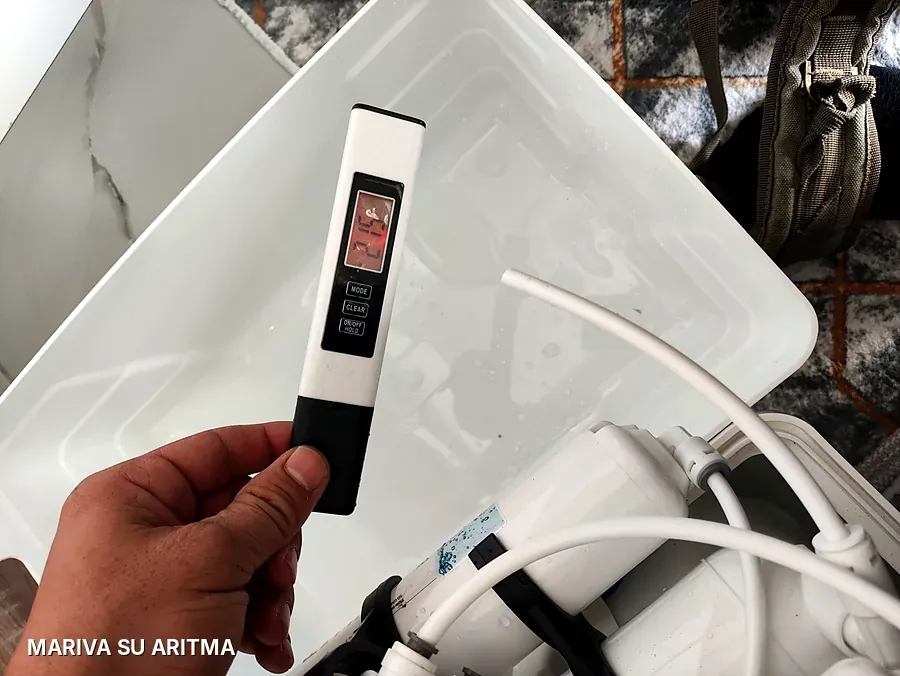
The most reliable sign is the TDS value. If the TDS of the filtered water has risen over time and is starting to approach that of mains water, the membrane is worn. The tank filling more slowly than usual and a change in the taste of the water are other signs. On systems with a TDS display (such as the MARIVA pH+ Digital), you can follow the value on the screen; on systems without a display, we measure it during filter replacement.
Can a membrane be cleaned?
In industrial systems, membranes can be cleaned in place with special chemicals. For home membranes, however, this is not practical; rinsing a membrane with water at home does not remove the build-up in its pores and can damage the film. In home systems, a worn membrane is replaced. This takes a few minutes and is done on the same visit as the filter replacement.
75 GPD or 100 GPD?
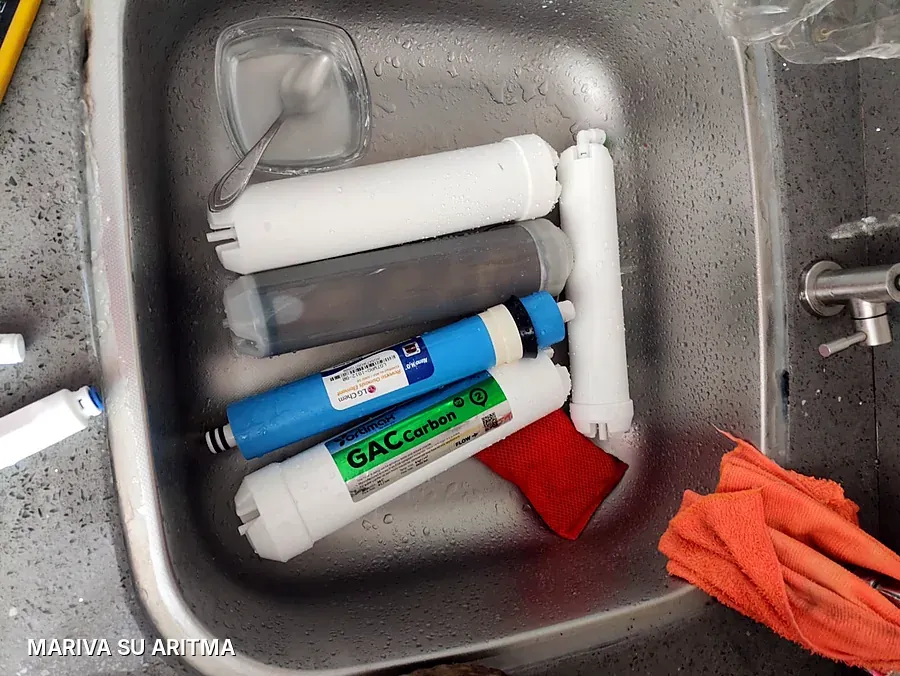
A membrane's capacity should be considered together with the system's pressure. Systems without a pump use a 75 GPD membrane suited to mains water pressure. In systems with a pump, the pump provides the pressure, so a 100 GPD membrane works efficiently. In a home without enough pressure, simply fitting a bigger membrane does not solve the problem; the pressure needs looking at first. For this, see our article Can you add a pump to a water filter?
Membrane replacement
We replace the membrane together with the filters, then measure the TDS of the water and show you the result. Filter replacement starts from 1200 TL; the price of the membrane depends on your system's model. Send us the make and model of your system on WhatsApp and we will give you an exact price.
Questions about membrane filters
How often is a membrane filter replaced?
In home systems, the membrane is usually replaced every 12–18 months. If the pre-filters are not replaced on time, this interval gets shorter.
How can I tell the membrane is worn out?
If the TDS of the filtered water rises over time and approaches that of mains water, if the tank fills more slowly than usual, or if the water tastes different, the membrane needs checking.
Can a membrane filter be washed?
Washing is not recommended for home membranes; it does not remove the build-up and can damage the film. A worn membrane is replaced.
More guides
- How to Replace Water FiltersThe eight steps of a filter change, from turning off the water to the TDS test, with photos we took on real jobs.
- What Is TDS? What Should TDS Be in Drinking Water?What TDS means, how it is measured, the World Health Organization's assessment and the range to expect in filtered water.
- What Is Water Purification and How Does It Work?How reverse osmosis works, the order of the filters, waste water, and how home and industrial units differ.
Let us check your membrane
When we replace your filters, we measure the TDS of the filtered water and tell you what condition the membrane is in. Filter replacement from 1200 TL.