

What Is Water Purification and How Does It Work?
Water purification means removing most of the sediment, chlorine and dissolved salts from tap water to give you clean drinking water. At home the most common method is reverse osmosis: systems fitted under the kitchen worktop use it and deliver filtered water through a separate tap.
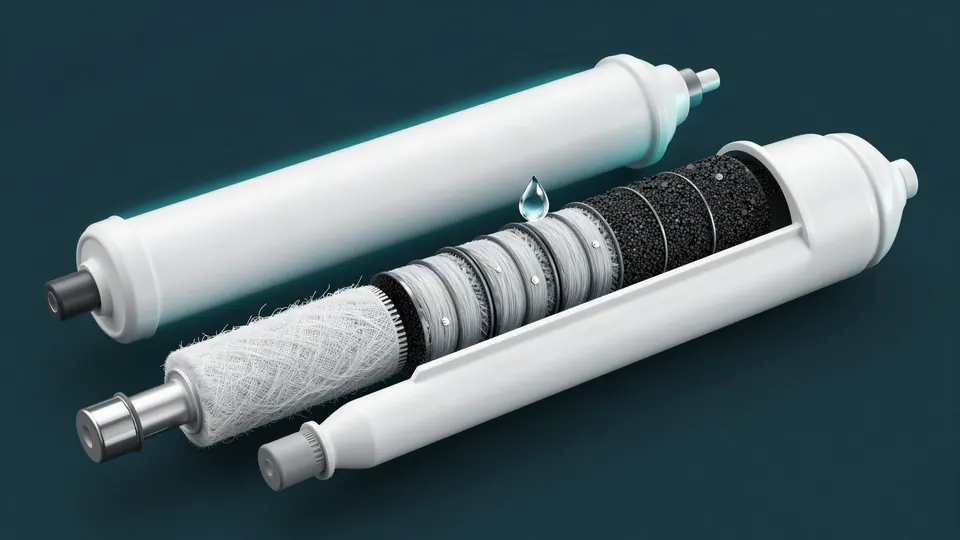
How does reverse osmosis work?
At the heart of the system is a semi-permeable membrane. Its pores are small enough to let water molecules through while holding back most of the dissolved salts and limescale. Water is pushed through this membrane under pressure. What passes through goes to the tank as filtered water; the salts the membrane holds back are flushed down the drain with some of the water.
That last point is often overlooked: reverse osmosis systems produce waste water while they run. How much depends on the mains water pressure, the water temperature and the system itself. When pressure is low, less water passes through the membrane and a larger share goes down the drain. This is why systems with a pump work more efficiently in low-pressure buildings.
What does each filter do?
The membrane is a delicate part. If sand, rust and chlorine reach it directly, it soon deteriorates. That is why pre-filters prepare the water first. The five-stage layout common in home systems looks like this:
- The sediment filter traps sand, rust and sediment.
- Granular activated carbon reduces the taste and smell of chlorine.
- The carbon block captures remaining chlorine and organic matter, protecting the membrane.
- The reverse osmosis membrane removes most of the dissolved salts and limescale.
- The post-carbon filter polishes the taste of the water stored in the tank before it reaches the tap.
Six-stage systems usually add a mineral or pH+ filter. This adds some minerals back to the filtered water and softens its taste.
- Mains waterTap water enters the system from the cold water supply.
- Sediment filterTraps sand, rust and sediment.
- Granular activated carbonReduces the taste and smell of chlorine.
- Carbon blockCaptures remaining chlorine and organic matter, protecting the membrane.
- Reverse osmosis membraneRemoves most of the dissolved salts and limescale.
The rejected salts are flushed down the drain with some of the water - TankFiltered water waits, ready for the tap.
- Post-carbon filterPolishes the taste of water from the tank before it reaches the tap.
- TapFiltered water flows from a separate tap or a filtered water tap (3-way tap).
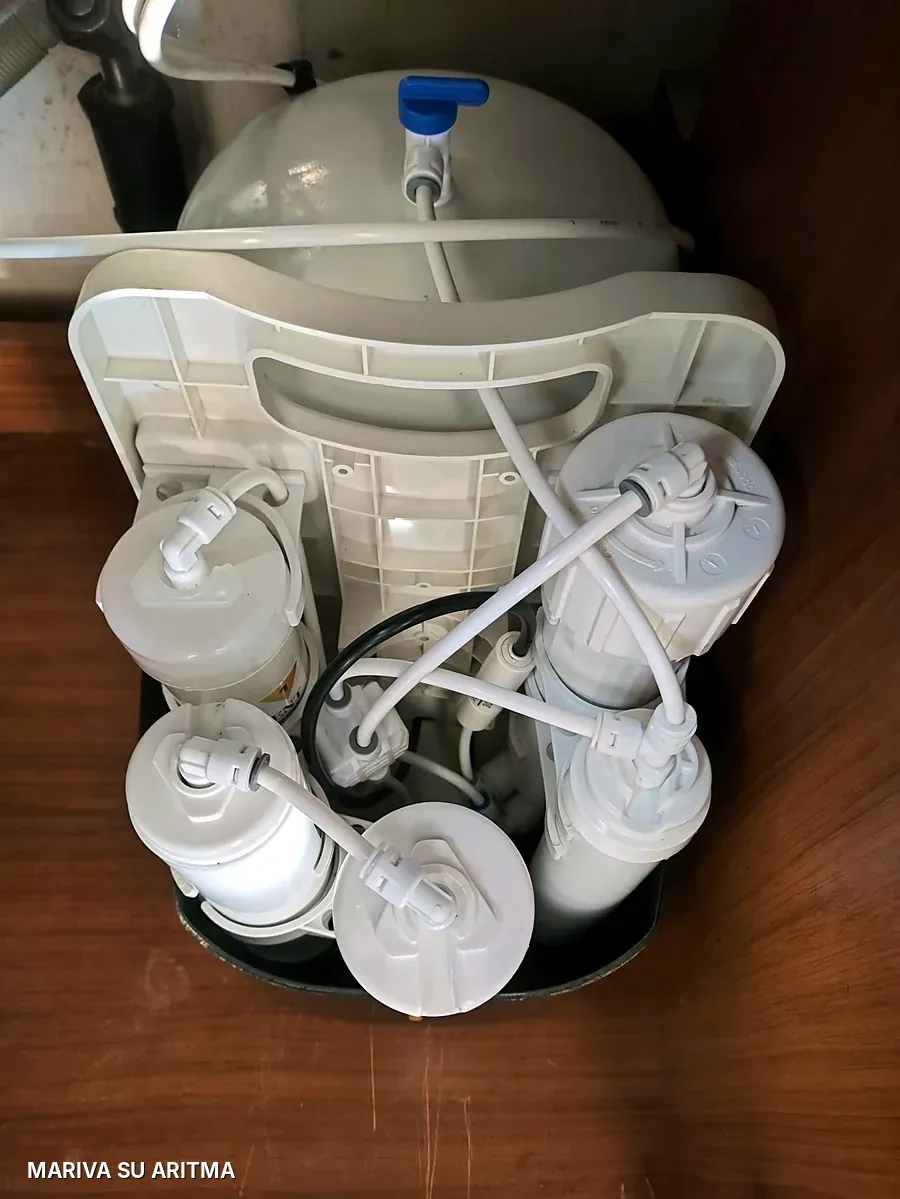
What does a water filter reduce, and what does it leave unchanged?
A properly working reverse osmosis system markedly reduces limescale (calcium and magnesium), dissolved salts, the taste of chlorine and sediment. The practical way to see this is a TDS reading: the value drops after filtration. We explain the details in our article What is TDS?
The water utility monitors whether mains water meets drinking water standards. In Antalya this is the job of ASAT, Antalya's water utility, which analyses mains water regularly. In homes, people mostly choose a water filter because of limescale, taste and smell.
Home and industrial water purification
Home systems run on a 75 or 100 GPD membrane with an 8–12 litre tank. GPD is the number of gallons a membrane can filter in a day; 75 GPD comes to roughly 284 litres under ideal conditions. Cafés, restaurants and hotels need far more. These businesses use systems with a capacity of 300 GPD or more and large separate tanks; for an example, see the RO 300 system.
Do you need a water filter in Antalya?
Antalya's mains water comes from karst springs and is classed as hard water. Although it is safe to drink, the limescale shows in your kettle and in the taste. With hard water, the difference a water filter makes is noticeable straight away. We explain the reasons, with sources, in our article Why is Antalya's water so hard?
What determines how long a system lasts?
The lifespan of a reverse osmosis system depends largely on replacing the filters on time. Pre-filters are usually replaced every 6 months, the membrane every 12–18 months. When the pre-filters are overdue, chlorine and sediment reach the membrane and it wears out early. We cover replacement intervals in a separate article.
Where should you start?
Before buying a system, consider the number of people in your household, your water pressure and the space in your kitchen cupboard; these three things largely decide the model. Our article How to choose a water filter goes through these questions one by one. If you are still unsure, get in touch for a free home visit and water test in Antalya.
More guides
- What Is a Membrane Filter and When Should It Be Replaced?How does a reverse osmosis membrane work, what does it remove, why does it wear out and how can you tell it is time to replace it?
- Can You Drink Tap Water in Antalya?Who checks the mains water, what changes its taste, and how can you get it tested?
- Bottled Water or a Water Filter?Work out the monthly and yearly cost using your own bottle price; differences in carrying, taste and everyday use.
Have a question?
We offer a free home visit and water test in Antalya. Message us on WhatsApp or give us a call.