

Can You Add a Pump to a Water Filter?
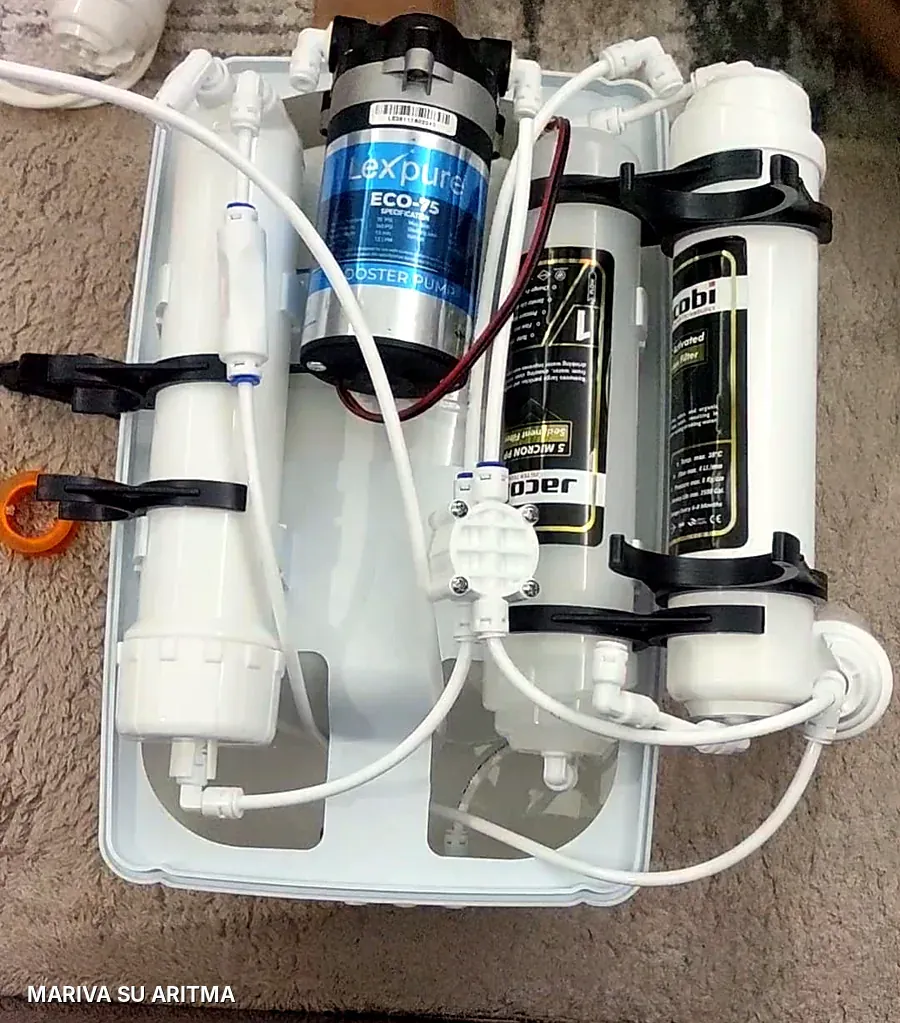
Yes. A booster pump can be retrofitted to a reverse osmosis system without a pump. In homes with low mains water pressure, the pump lets the membrane work efficiently: the tank fills faster, water flows more strongly from the tap and less of the water goes to the drain as waste.
When do you need a pump?
A reverse osmosis membrane filters water using a pressure difference, and home membranes generally work efficiently at around 3 bar and above. Below that, the system still works but slows down. Signs that you need a pump include:
- The tank is slow to fill, and the filtered water runs low after a few glasses.
- Water comes out of the filtered water tap in a thin, weak stream.
- The system sends water to the drain non-stop for long periods.
- The home is on a high floor, and the building has no pressure booster set or an inadequate one.
- The water comes by gravity from a tank on the roof or in the garden.
Pressure should be measured rather than guessed. On a home visit we measure the water pressure with a gauge and tell you whether you need a pump. A general comparison of systems with and without a pump is in our article Water filter with or without a pump?
What is a booster pump?
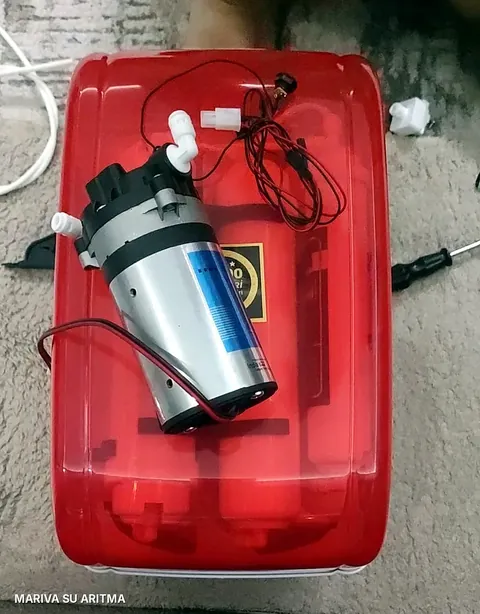
A booster pump is a small diaphragm pump fitted inside or next to the water filter. It pressurises the water just before the membrane. The pump plugs into a socket via an adaptor and usually runs on 24 volts. It comes with two pressure switches: one stops the pump running dry when no water is coming from the mains, the other stops the pump when the tank is full. In other words, the pump does not run all the time, only while the tank is filling.
What is involved in fitting a pump?
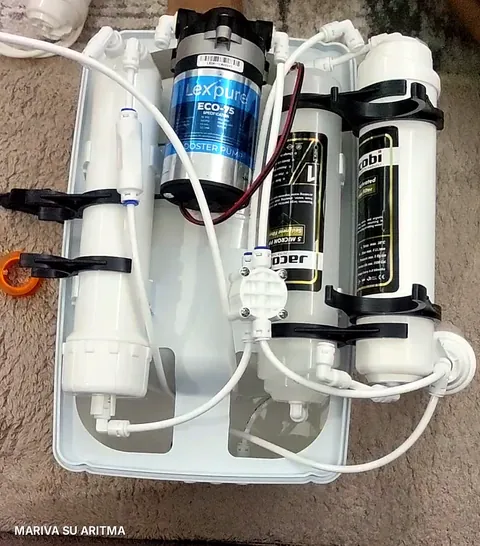
- The pump is placed between the system's mains inlet and the membrane, and the tubing is connected.
- The low- and high-pressure switches are connected and set up.
- The pump's adaptor is plugged into a socket under the sink. If there is no socket, you need to have an electrician install one beforehand.
- The system is switched on, and the tank's fill time and any leaks are checked.
- The TDS of the filtered water is measured. Because the membrane works more efficiently at higher pressure, the value often drops a little further.
When fitting a pump, we also check the condition of the filters and the membrane. If the filters are due for replacement anyway, it makes sense to do both on the same visit.
Add a pump or buy a system with a pump?
If your system is a few years old, its casing is sound and the only problem is pressure, fitting a pump is the most economical solution. If the system is old, breaks down often, or its membrane and filters need replacing too, buying a system with a pump outright may make more sense. MARIVA's models with a pump come with a 100 GPD membrane: the POWER and the POWER XL.
Is a building's pressure booster set the same as a booster pump?
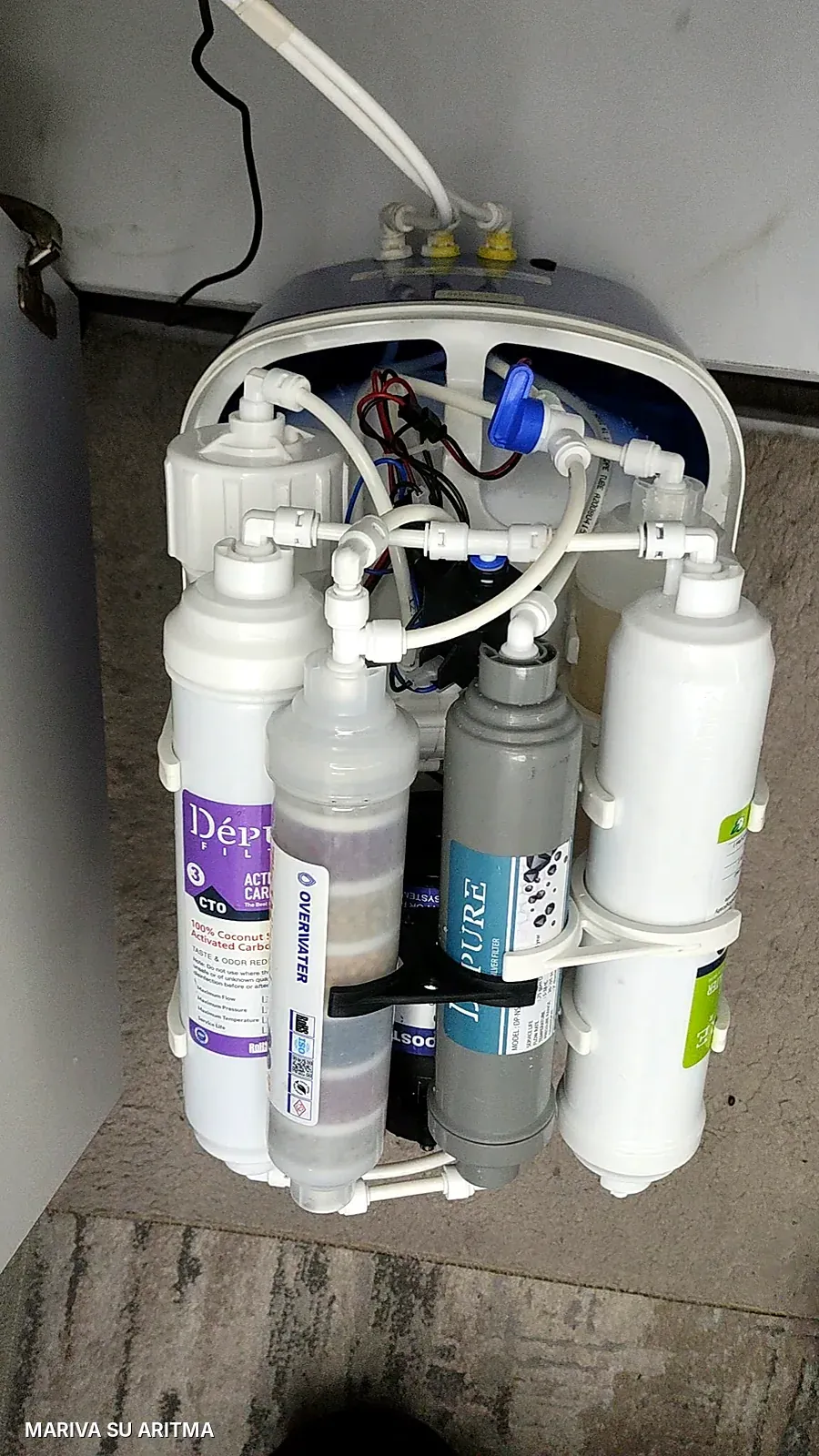
No. A pressure booster set raises the pressure of the whole plumbing system in a building or home; taps, the shower and the washing machine all benefit. A booster pump, by contrast, pressurises only the water going to the water filter's membrane. Even if the building has a booster set, a separate pump may be needed for the water filter if it is set low or if not enough pressure reaches the upper floors.
Is the pump noisy, and does it use electricity?
You can hear a faint hum while the pump is running; with the under-sink cupboard door closed, most households do not notice it. Because the pump runs only while the tank is filling, it is on for short periods during the day and uses little electricity. If the pump becomes noticeably louder over time, or does not stop even when the tank is full, the pressure switch needs checking. We have listed other signs of a fault in our article Water filter maintenance.
Questions about adding a booster pump
Can a pump be fitted to any water filter?
It can be fitted to most home reverse osmosis systems. There needs to be room for the pump inside or next to the system, and a socket under the sink. Send us a photo of your system and we will tell you whether it is suitable.
Does the pump run all the time?
No. The pump runs only while the tank is filling; once the tank is full, the pressure switch stops it.
Does fitting a pump change the water quality?
The membrane works more efficiently at higher pressure. As a result, the TDS of the filtered water often drops a little and less water goes to waste.
More guides
- Water Filter With or Without a Pump?How can you tell your water pressure, when do you need a pump, and what is the difference in noise and power use?
- What Is a Membrane Filter and When Should It Be Replaced?How does a reverse osmosis membrane work, what does it remove, why does it wear out and how can you tell it is time to replace it?
- Water Filter Maintenance and Signs of FaultsWhat you can do at home, signs such as leaks and water running non-stop, and what a service visit checks.
Let us measure your water pressure
On a home visit we measure your water pressure and tell you whether you need a pump. You can also send us a photo of your system on WhatsApp.