

Water Filter With or Without a Pump?
One thing decides it: the water pressure in your home. If the pressure is good, a system without a pump is enough, and it is quieter. If the pressure is low, a system without a pump runs inefficiently, and you need a model with a pump.
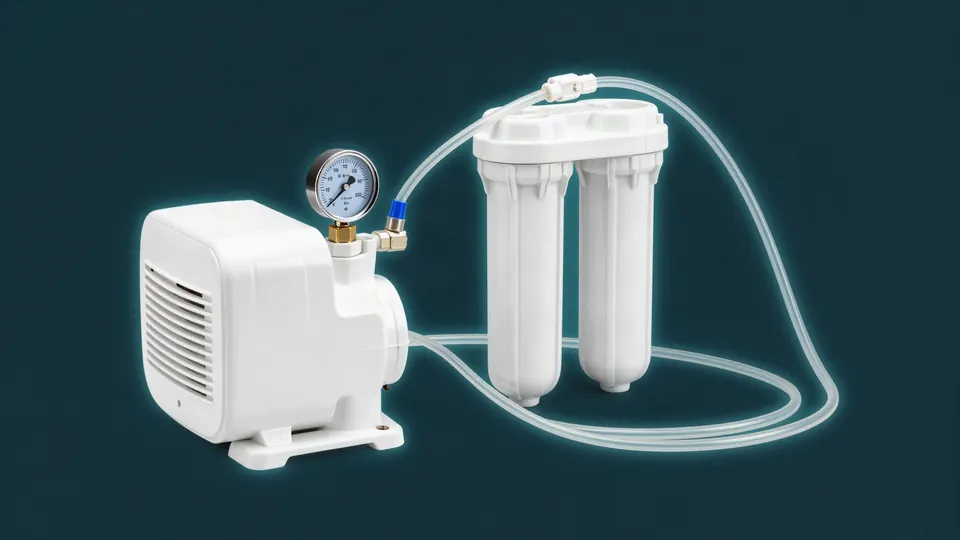
Why does pressure matter so much?
A reverse osmosis membrane filters water using a pressure difference. Home membranes generally work efficiently at around 3 bar and above. As pressure drops, less water passes through the membrane, the tank fills slowly and a larger share goes down the drain as waste water. A pump solves this by pressurising the water before it reaches the membrane.
How can you tell what your water pressure is?
The exact figure can only be measured with a pressure gauge (manometer), which we do during the home visit. Before that, a few signs give you an idea:
- The kitchen tap runs weakly even when fully open.
- You live on an upper floor and the shower pressure is poor.
- The building is old and has no pressure booster set, or only a weak one.
- Pressure drops noticeably in the evenings.
If any of these apply, you will most likely need a model with a pump.
The two types compared
| Without pump | With pump | |
|---|---|---|
| Suitable building | Buildings with good pressure | Low-pressure buildings, upper floors |
| Electricity | Not needed | Needs a socket under the sink |
| Noise | Silent | A faint hum while the tank fills |
| Membrane | 75 GPD | 100 GPD |
| Maintenance | Filters only | Filters and a pump check |
| Price | More economical | Slightly higher because of the pump |
Advantages of a system without a pump
It needs no electricity, makes no noise and has one less part that can fail. In homes with good pressure it is no worse than a system with a pump. MARIVA's 8-litre and 12-litre models without a pump are designed for these homes.
Advantages of a system with a pump
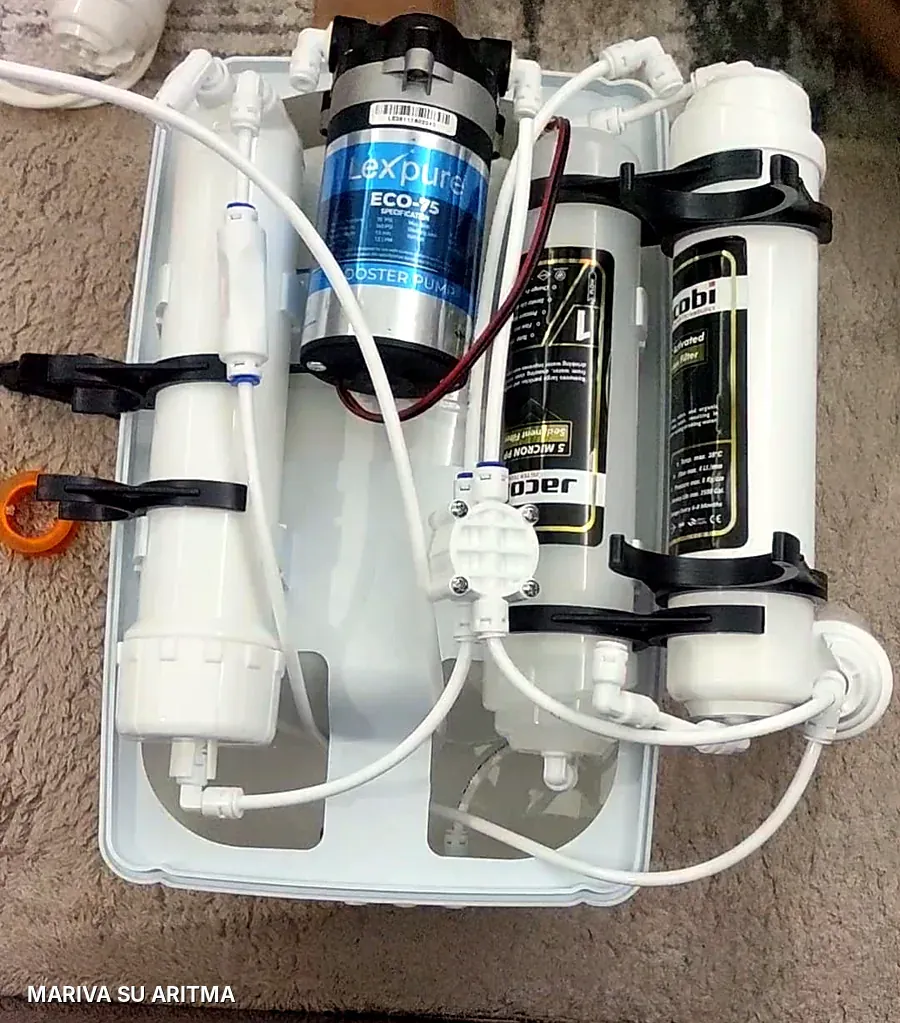
Even when pressure is low, the tank fills at a normal rate and the proportion of waste water stays reasonable. Models with a pump also have a higher-capacity membrane (100 GPD). In homes that use a lot of water during the day, you notice the difference. Options: POWER and POWER XL.
The cost of the wrong choice
If a system without a pump is fitted in a low-pressure building, the tank may take hours to fill and the system sends more water down the drain than it should. Conversely, in a home with good pressure, a system with a pump needlessly requires electricity and a socket. That is why we never recommend a system without measuring the pressure first.
Can a pump be added to an existing system?
Yes. If you use a system without a pump and a pressure problem appears later, a booster pump can be fitted without replacing the system. We explain when it makes sense to add a pump and when to buy a system with a pump in our article Can you add a pump to a water filter?
In short
If you are not sure about your pressure, have it measured first. In Antalya we do the home visit and pressure measurement free of charge, then recommend a model with or without a pump based on the result. You can compare all models on our water filters page.
More guides
- Can You Add a Pump to a Water Filter?Signs of low pressure, how a booster pump works, and whether to add a pump or buy a unit with one built in.
- How to Choose a Water FilterTank size, pump, cupboard space, number of stages, tap and service: seven questions to answer before you buy.
- What Is a Membrane Filter and When Should It Be Replaced?How does a reverse osmosis membrane work, what does it remove, why does it wear out and how can you tell it is time to replace it?
Have a question?
We offer a free home visit and water test in Antalya. Message us on WhatsApp or give us a call.